Key takeaways
-
Many brands quit marketing just as their efforts begin to show positive results, often due to a lack of clear expectations and milestones.
-
Expectations drive client churn more than actual results; agreeing on realistic KPIs at onboarding can significantly improve client retention.
-
Growth for premium and D2C brands typically occurs in three phases, with initial stages focused on fixing foundational issues rather than immediate profitability.
-
Founders often misinterpret marketing performance feedback due to financial pressures, which highlights the importance of having clear agreements on performance metrics from the start.
-
To avoid premature campaign abandonment, brands should establish specific milestones, hold regular reviews, and allow adequate time for campaigns to take effect.
The brand that quit at 2.2x
A founder came to us with a brand that was everywhere: Instagram, Meta ads, Google, two marketplaces. On paper, it was a busy, visible business. In the numbers, every rupee of ad spend was returning 63 paise.
We proposed a nine-month plan. First fix the basics: tracking, product pages, offers, and creativity. Then rebuild the ad accounts on clean data. Then scale what worked.
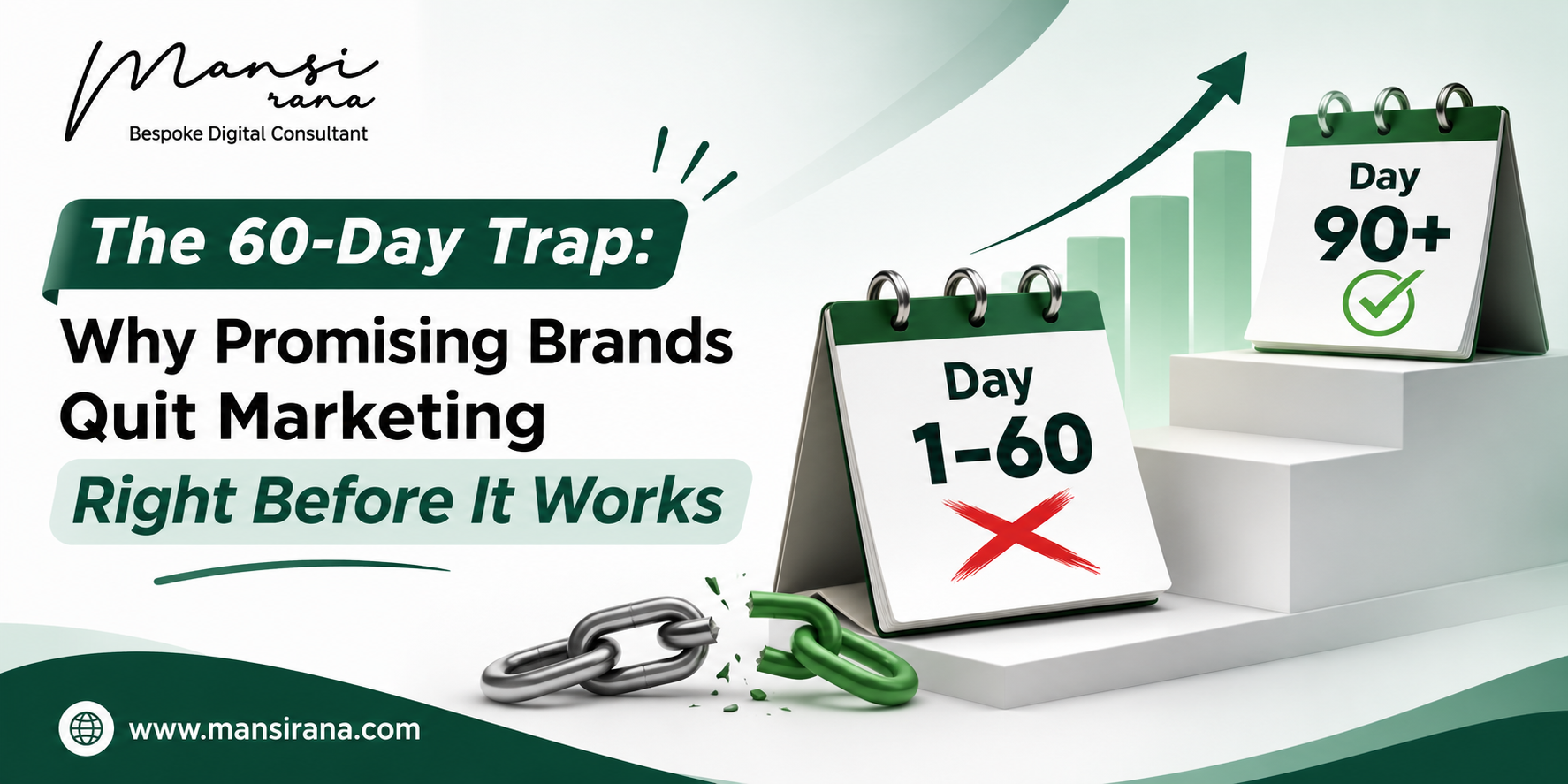
Sixty days in, ROAS had moved from 0.63 to 2.2. Website traffic was up 360%. The founder paused the engagement, calling the work horrible.
I’m not telling this story to complain. I’m telling you this because I have watched it happen across many brands in 24 years, and almost every time, the founder pulled the plug just as the curve was starting to bend. If you run a growing brand, this post is about how not to be that founder, and how to tell whether your marketing partner is actually failing or simply hasn’t reached the part where it pays off.
This isn’t one agency’s problem
The pattern shows up in industry data, not just my client list.
A 2026 churn analysis found that the first 90 days are the period of highest risk for a brand to leave its agency, across every agency model studied. Paid-ads relationships are the most fragile, with PPC showing the highest churn in the industry at around 49% a year.
The most telling finding is this: expectations drive churn more than actual results. Agencies that agree realistic KPIs at onboarding retain clients 15–20 percentage points better than the industry average. HubSpot makes the same point. In most cases, an agency’s poor performance is perceived, because nobody agreed what good looked like at day 60.
One US agency even wrote publicly about a client who kept pausing for 60 days, running ads for five, then pausing again. Their verdict was simple: the client never spent long enough for the campaigns to learn anything.
So if you have paused an agency at day 60, you are in very large company. The question is whether it was the right call.
Why founders pull the plug (and why it’s understandable)
I want to be fair to that founder, because their frustration was real.
They were measuring cash, not progress. Going from 0.63 to 2.2 ROAS is a big improvement. But if a brand’s margins need 3x to break even, 2.2 still means every campaign loses money. A 360% jump in traffic doesn’t pay salaries. When a founder says “horrible work”, they often mean “my runway is shrinking and this hasn’t fixed it yet.”
Nobody had written down what day 60 should look like. We said “this takes nine months”. They heard “you’ll see the difference soon”. Without a signed milestone, any number can be read as failure.
Anxiety shows up as activity. Daily data requests. Interns briefed to “help” the agency. Changes to the website mid-campaign. Each one feels like taking control. Together, they reset the ad algorithms’ learning and blur what is actually working.
None of this makes a founder a bad client. It makes them a founder with limited money and a lot riding on it. The fix isn’t more patience. It’s a clearer agreement on day one.
What a real growth curve looks like
For most premium and D2C brands starting from weak numbers, growth comes in three phases. The timings below are conservative, and every brand moves at its own pace.
Phase 1: Fix the foundation (Months 1–3)
What happens: tracking, site speed, product pages, offers, creative testing, account restructure.
Judge it on: cleaner data, falling cost per click, ROAS moving towards breakeven.
Phase 2: Find what works (Months 4–6)
What happens: winning audiences and creatives identified, budget shifted to them, SEO and content start compounding.
Judge it on: ROAS at or above breakeven, repeat customers, cost per acquisition stabilising.
Phase 3: Scale profitably (Months 7–12)
What happens: spend increased on proven campaigns, new channels added, brand search grows.
Judge it on: profit per order, customer lifetime value, revenue growth month on month.
Notice what the first phase is judged on. Not profit. Direction. A brand that goes from 0.63 to 2.2 ROAS in 60 days is doing exactly what phase one should do. Stopping there means paying for all the repair work and leaving before the returns arrive.
It also means the next agency starts from scratch, often rebuilding the same foundations, and the founder is back at day one with less money.
How to avoid the 60-day trap
Whether you work with us or anyone else, these five steps will protect your money and your sanity.
- Know your breakeven ROAS before you start. Work out the return your margins need to break even. That number decides whether 2.2x is a win or a warning.
- Fund the whole journey, not the first month. If you can’t cover nine months of fees and ad spend, start with a smaller scope you can sustain. A shorter plan done fully beats a long plan abandoned halfway.
- Sign milestones, not promises. Agree in writing what day 30, 60 and 90 should look like. For example: “ROAS from 0.6 to 2.0 by day 60, 3.0 by day 120.” Then you’re judging the work against a target you both chose.
- Hold formal reviews at 30, 60 and 90 days. Search Engine Journal reports that agencies running these check-ins see consistently lower first-year churn. Use them to raise doubts early, not to collect daily spreadsheets.
- Give the work room. One decision-maker on your side. Weekly reporting, not daily. No website changes mid-campaign without a conversation first.
If an agency can’t tell you what day 60 should look like, that is a real red flag. If it can, and it hits the number, give it the time it asked for.
Before you hire, or fire, your next agency
At Mansi Rana Digital – A Boutique Digital Marketing Consulting, every engagement starts with the numbers your brand actually needs: your breakeven ROAS, a realistic 90-day milestone plan, and a monthly Growth Ledger that shows exactly where you stand against it. I review every account myself, with an experienced team. No interns.
If you’re about to hire a growth strategy consultant, or you’re 60 days in and unsure whether to keep going, book a 30-minute Growth Diagnostic. I’ll look at your current numbers and tell you honestly which phase you’re in and what the next 90 days should deliver, even if we don’t end up working together.
Book your Growth Diagnostic →